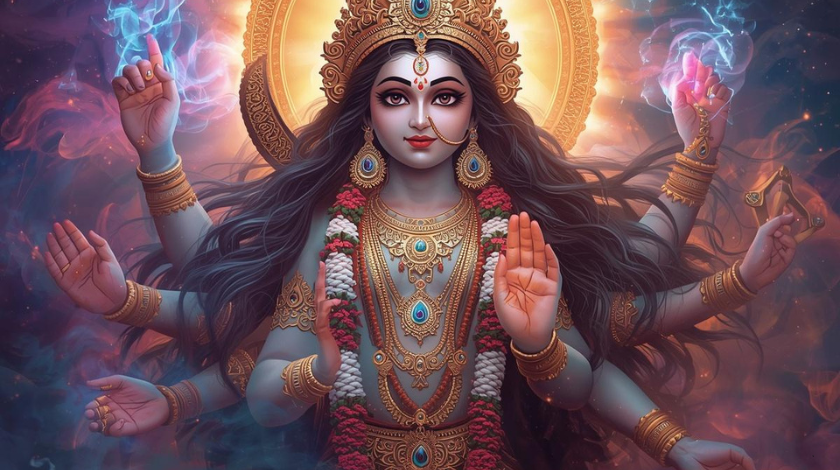
When I first walked into a Hindu temple during a trip to India fifteen years ago, I was completely overwhelmed. The colorful statues, the smell of incense, the sound of bells, and people chanting in a language I didn’t understand—it all felt foreign and mysterious. I remember standing there, wondering what all these rituals meant and why there were so many different gods. Like many Westerners, I had heard of Hinduism but realized I knew almost nothing about what Hindus actually believe or practice. That experience sparked a journey of learning that has completely changed my perspective on spirituality, and I want to share what I’ve discovered with you.
If you are reading this because you want to understand Hinduism better—whether for personal curiosity, academic reasons, or because you have Hindu friends or colleagues—you have come to the right place. This guide will break down the complex traditions of Hinduism into simple, easy-to-understand concepts. By the end, you will have a clear picture of what Hinduism is, what Hindus believe, and why this ancient tradition continues to influence millions of lives today.
What Exactly is Hinduism? Understanding the Basics
Here is something that might surprise you: the Word “Hinduism” was not created by Hindus themselves. It was actually a term used by outsiders—Persians and later British colonizers—to describe the diverse religious practices they observed in India. The Word comes from “Sindhu,” the Sanskrit name for the Indus River. The people living beyond this river were called “Hindus” by Persian speakers, and the term eventually stuck.
Hindus themselves often prefer to call their tradition Sanatana Dharma, which means “the eternal way” or “the eternal law.” This name reveals something important about how Hindus view their faith. They do not see it as a religion in the Western sense—a system you join or leave—but rather as an eternal truth that has always existed and applies to all people, regardless of whether they recognize it.
Unlike Christianity, Islam, or Buddhism, Hinduism has no single founder. There was no Buddha, Jesus, or Muhammad who started the tradition. Instead, Hinduism grew organically over thousands of years, absorbing and integrating countless spiritual insights, regional practices, and philosophical developments. This is why Hinduism can seem so diverse and even contradictory at times. One Hindu might worship a personal god with intense devotion, while another might meditate on the formless absolute. Both are considered valid paths within the vast umbrella of Hindu tradition.
Another unique feature of Hinduism is the absence of a central authority. There is no pope, no governing council, and no official creed that all Hindus must accept. This makes Hinduism incredibly tolerant and flexible. As Mahatma Gandhi once said, “If a man reaches the heart of his own religion, he has reached the heart of the others too. There is only one God, and there are many paths to him.” This openness has allowed Hinduism to survive for over 4,000 years, while countless other traditions have disappeared.
The Core Beliefs That Unite Hindus
Despite the incredible diversity within Hinduism, several key concepts form the foundation that most Hindus would recognize. Understanding these ideas is essential to grasping how Hindus view the world, life, and death.
Brahman and Atman: The Divine Reality
At the heart of Hindu philosophy is the concept of Brahman—the ultimate, unchanging reality that underlies and pervades everything in the universe. Think of Brahman like the ocean, while individual souls are like waves. The wave appears separate and distinct, but it is never truly separate from the ocean. It is made of the same water, follows the same laws, and eventually returns to the whole.
This brings us to Atman, which is the individual soul or self within each person. Here is where Hinduism gets profound: it teaches that your true self, your Atman, is not your body, not your mind, not your personality or memories. Your true self is pure consciousness, and it is identical with Brahman. The famous phrase “Tat Tvam Asi” (That Thou Art) from the Upanishads captures this truth—you are not separate from the divine; you are an expression of it.
This teaching has practical implications for how we treat others. If the divine reality dwells in every person, then every interaction becomes sacred. This explains why many Hindus greet others with “Namaste”—the gesture of palms together with a slight bow—which literally means “I bow to the divine in you.”
Karma: The Law of Cause and Effect
You have probably heard the Word “karma” used in casual conversation, often simplified to mean that good actions bring good results and bad actions bring bad results. While this is not entirely wrong, the Hindu understanding of karma is much deeper and more nuanced.
Karma literally means “action” or “deed,” but it refers specifically to the moral law of cause and effect that governs the universe. Every thought, Word, and action creates an impression that shapes your future experiences. Importantly, karma is not punishment from an external judge; it is simply the natural consequence of how energy works in the universe. Just as planting apple seeds produces apple trees, selfish actions produce suffering while compassionate actions produce peace.
What makes karma particularly significant in Hinduism is its connection to rebirth. Hindus believe that the consequences of your actions do not necessarily play out in this single lifetime. The soul carries its karmic impressions from one life to the next, which brings us to the concept of samsara.
Samsara and Moksha: The Cycle and Its End
Samsara refers to the continuous cycle of birth, death, and rebirth that all souls undergo. This is not seen as a punishment but as the natural condition of unenlightened existence. Each life offers opportunities to learn, grow, and work through accumulated karma.
However, the ultimate goal of Hindu spiritual practice is to break free from this cycle and achieve moksha—liberation or enlightenment. Moksha is not heaven in the Christian sense, where you go after death to enjoy eternal rewards. Instead, it is the realization of your true nature as Atman-Brahman, the dissolution of the illusion of separateness, and the end of all suffering.
Different schools of Hinduism describe moksha differently. Some emphasize union with a personal God; others focus on the dissolution of individual identity into the absolute; still others describe it as pure awareness beyond all concepts. But all agree that moksha represents the highest possible human achievement and the purpose of spiritual practice.
Dharma: Living Righteously
The concept of dharma is notoriously difficult to translate. It encompasses duty, righteousness, law, ethics, and the inherent nature of things. Your dharma includes universal duties—such as non-violence, truthfulness, and compassion—that apply to all humans. But it also includes specific duties based on your stage of life, your occupation, and your unique circumstances.
Living according to dharma creates positive karma and moves you closer to moksha. Ignoring dharma creates negative karma and keeps you bound to samsara. This is why ethical living is not separate from spiritual practice in Hinduism; it is the foundation of it.
The Four Paths of Yoga: Practical Spirituality
Many people in the West associate yoga with physical exercise—stretching, poses, and breathing techniques. While these practices (called hatha yoga) are part of the tradition, they represent only one small aspect of what yoga truly means. The Word yoga comes from the Sanskrit root “yuj,” meaning to yoke or unite. Yoga is any practice that unites the individual soul with the divine reality.
Recognizing that people have different temperaments and capacities, Hindu tradition offers four main paths of yoga:
Karma Yoga: The Path of Action
Karma yoga is for people who are naturally active and find it difficult to sit still for meditation. This path teaches that you can transform ordinary work into spiritual practice by changing your attitude. Instead of working for personal gain, recognition, or results, you work as a service to the divine. You perform your duties to the best of your ability without attachment to outcomes.
This path is beautifully illustrated in the Bhagavad Gita, where Lord Krishna advises the warrior Arjuna to fight not for victory or kingdom, but because it is his duty as a warrior and because all actions should be dedicated to the divine. In modern terms, karma yoga might mean doing your job excellently while caring more about helping others than getting promoted, or volunteering your time without expecting thanks.
Bhakti Yoga: The Path of Devotion
Bhakti yoga is the path of love and devotion toward a personal form of God. This is perhaps the most accessible path for most people because it uses emotions we already understand—love, longing, surrender, and service. Through prayer, singing, temple worship, and cultivating a personal relationship with the divine, devotees (bhaktas) seek to merge with the object of their devotion.
What is remarkable about bhakti yoga is that it accepts all forms of devotion as valid. Whether you relate to God as a parent, child, friend, beloved, or master, the tradition honors your unique relationship with God. This explains the incredible diversity of Hindu worship—from elaborate temple rituals to simple home prayers, from ecstatic dancing to silent contemplation.
Jnana Yoga: The Path of Knowledge
Jnana yoga is for those with analytical minds who seek truth through study, contemplation, and discrimination between the real and the unreal. This path involves studying the sacred texts, reflecting on their teachings, and using reason to strip away false identifications, leaving only the true self.
The process of jnana yoga can be summarized as: “Not this, not this” (Neti, neti). You systematically examine your experience and recognize that you are not your body (it changes), not your mind (it fluctuates), not your roles or possessions (they are temporary). What remains when all temporary identifications are removed? That is the Atman, your true nature.
Raja Yoga: The Path of Meditation
Raja yoga, also called ashtanga yoga (the eight-limbed path), is the systematic science of meditation and mind control. It includes ethical disciplines, physical postures, breath control, withdrawal of the senses, concentration, meditation, and, finally, absorption in the divine.
This is the path most Westerners associate with yoga, though they usually practice only the physical postures (asanas) and breathing exercises (pranayama). The full system, as described by the sage Patanjali in the Yoga Sutras, is a comprehensive method for calming the mind and realizing the true self.
Understanding Hindu Deities and Worship
One of the most confusing aspects of Hinduism for outsiders is the apparent worship of many gods. Images of Ganesha with an elephant head, Shiva with blue skin and multiple arms, and Kali wearing a necklace of skulls can seem strange or even frightening if you do not understand their symbolic meaning.
Hinduism is actually henotheistic rather than polytheistic. This means that while Hindus worship many deities, they generally understand these as different manifestations of one ultimate reality. Any single form cannot fully capture the infinite divine; different forms reveal different aspects of its nature.
The Trimurti represents three fundamental functions of the divine: Brahma, the creator; Vishnu, the preserver; and Shiva, the destroyer/transformer. Importantly, destruction in Hinduism is not negative; it is necessary for renewal and transformation. Shiva destroys ignorance and ego to make way for spiritual growth.
Beyond these three, countless deities represent specific divine qualities. Ganesha, the elephant-headed god, removes obstacles and is invoked at the beginning of any new venture. Lakshmi represents wealth and prosperity. Saraswati embodies knowledge and the arts. Hanuman symbolizes strength, devotion, and service. Krishna and Rama are avatars (incarnations) of Vishnu who taught through their lives and teachings.
Most Hindus choose one deity as their ishta devata—their personal form of God—with whom they have a special relationship. This does not mean they deny other deities; it simply means they have found a particular form that resonates with their heart. A Hindu might say, “All rivers lead to the ocean; I choose to follow this particular river.”
Worship (puja) can take place in temples, with priests performing elaborate rituals, or simply at home, with offerings of flowers, light, and food before a small shrine. The important element is devotion and sincerity, not the scale of the ceremony.
Sacred Texts: The Wisdom of the Ages
Hindu sacred literature is vast—larger than the combined scriptures of all other major religions. It is traditionally divided into two categories: Shruti (that which is heard) and Smriti (that which is remembered).
The Vedas are the oldest and most authoritative texts, composed between 1500 and 500 BCE. They include hymns to various deities, rituals for ceremonies, and philosophical speculations. The Upanishads, which form the final part of the Vedas, contain the core philosophical teachings of Hinduism about Brahman, Atman, and moksha.
The two great epics, the Ramayana and Mahabharata, are beloved by Hindus of all backgrounds. The Ramayana tells the story of Prince Rama’s exile, his wife Sita’s abduction by the demon king Ravana, and the eventual rescue and return to righteousness. It teaches ideals of duty, loyalty, and virtue.
The Mahabharata, the longest epic poem in the world, centers on a great war between cousins but contains countless stories and teachings. Within it is the Bhagavad Gita (Song of the Lord), which has become the most popular Hindu scripture worldwide. It takes the form of a dialogue between Krishna and the warrior Arjuna on the eve of battle, addressing fundamental questions about duty, action, and spiritual liberation.
Other important texts include the Puranas (mythological stories that make philosophical teachings accessible), the Yoga Sutras (systematic instructions for meditation), and the Bhakti poetry of saints like Mirabai, Kabir, and Tukaram.
Hindu Practices in Daily Life
Hinduism is not just a set of beliefs; it is a way of life that touches every aspect of daily existence. Many Hindus begin their day with purification rituals, prayers, and meditation. The home often contains a shrine (puja room) where the family worships together.
Dietary practices are common, with many Hindus being vegetarian for religious and ethical reasons. The principle of ahimsa (non-violence) extends to animals, and the cow is considered sacred as a symbol of life and sustenance. However, not all Hindus are vegetarian, and dietary customs vary greatly by region and community.
Sacred symbols appear everywhere in Hindu life. The Om symbol represents the primordial sound of creation and the essence of the ultimate reality. The swastika (an ancient symbol of good fortune that predates its unfortunate Nazi appropriation) represents the eternal nature of Brahman. Tilak markings on the forehead indicate religious affiliation and blessings.
Festivals punctuate the Hindu calendar, celebrating the cycles of nature, the triumph of good over evil, and the lives of divine incarnations. Diwali, the festival of lights, celebrates Rama’s return to his kingdom and the victory of light over darkness. Holi, the festival of colors, celebrates the love between Krishna and Radha and the arrival of spring. Navaratri honors the divine mother in her various forms.
Pilgrimage (tirtha yatra) remains an important practice, with millions of Hindus traveling to sacred rivers (especially the Ganges), mountains, and temples. The Kumbh Mela, held every twelve years at four rotating sites, is the largest religious gathering in the world, attracting tens of millions of pilgrims for ritual bathing.
Clearing Up Common Misconceptions
Before concluding, let me address some misunderstandings that often confuse people about Hinduism.
First, the question of whether Hindus worship many gods or one God has no simple answer. It depends on the philosophical school and the individual practitioner. Some Hindus are monotheists who worship one supreme deity. Others are monists, seeing all deities as aspects of one formless absolute. Still others are polytheists in practice while accepting the underlying unity. All these positions are considered valid within Hinduism.
Second, the caste system is a social practice that has become associated with Hinduism, but it is not inherently religious. The original varna system described in ancient texts was based on qualities and occupations, not birth. Modern Hindu reformers have worked to eliminate caste discrimination, and many Hindus today reject caste entirely while remaining deeply religious.
Third, reincarnation in Hinduism is not the same as the Western New Age concept of coming back to learn specific lessons. It is the continuation of consciousness driven by karma until moksha is achieved. The goal is not to have “better” rebirths indefinitely but to transcend rebirth entirely.
Finally, yoga as practiced in gyms and fitness centers around the world is largely divorced from its spiritual roots. While physical yoga brings health benefits, traditional yoga is a complete spiritual discipline aimed at union with the divine.
Conclusion: An Invitation to Understanding
Hinduism is not a religion that demands conversion or claims exclusive possession of truth. It is a vast, ancient, and living tradition that offers maps for the spiritual journey while respecting that each traveler must walk their own path. Whether you are drawn to the intellectual rigor of Vedanta philosophy, the emotional richness of bhakti devotion, the practical discipline of yoga, or the ethical clarity of karma yoga, Hinduism provides tools for transformation.
What I have shared here is merely an introduction—a doorway into a mansion with countless rooms. If something in this guide resonates with you, I encourage you to explore further. Read the Bhagavad Gita. Try meditation. Visit a Hindu temple. Talk to Hindu friends about their experiences. The best way to understand any spiritual tradition is not through books alone but through open-hearted encounter.
Hinduism has survived for millennia not by remaining rigid but by adapting, absorbing, and renewing itself. In our modern world of rapid change and spiritual seeking, its ancient wisdom about the unity of all life, the importance of ethical living, and the possibility of human transformation remains as relevant as ever.
Frequently Asked Questions
Is Hinduism the oldest religion in the world? Hinduism is often called the oldest living religion because its roots trace back over 4,000 years to the Indus Valley Civilization. While ancient religions like those of Egypt or Mesopotamia existed earlier, they died out. Hinduism has continued uninterrupted to the present day.
Do Hindus believe in God? Yes, but Hindu concepts of God vary widely. Some Hindus worship a personal deity with form and attributes. Others meditate on a formless absolute. Many accept both perspectives as valid approaches to the same divine reality.
What is the Hindu holy book? Hinduism has many sacred texts rather than one single holy book. The Vedas are the oldest and most authoritative. The Bhagavad Gita is the most widely read and beloved scripture. The Ramayana and Mahabharata are epic poems that teach dharma through story.
Why do Hindus worship cows? The cow represents life and sustenance in Hinduism. It provides milk like a mother and asks nothing in return. Killing such a gentle, giving creature is seen as a violation of ahimsa (non-violence). However, cows are not worshipped as gods.
Can non-Indians practice Hinduism? Absolutely. Hinduism has no concept of heresy or apostasy. Anyone who sincerely practices the teachings—whether through yoga, meditation, devotion, or ethical living—is following Sanatana Dharma. Many Westerners have become serious practitioners and even formal initiates.
What happens after death in Hinduism? Most Hindus believe in reincarnation. After death, the soul (Atman) carries its karmic impressions into a new body. This cycle continues until the soul achieves moksha (liberation) and realizes its true nature as one with Brahman.